


To get wax out of a candle jar, freeze it for 2–4 hours so the wax shrinks and pops out with a butter knife, or pour boiling water in to float the wax to the top, let it set, and lift it off. Wipe the jar with warm soapy water and it's ready to reuse. Below we walk through four methods, when to use each, and how to skip the cleanup entirely.
That last inch of wax and the metal wick stuck to the bottom of a beautiful jar is one of the small, recurring annoyances of loving candles. The good news: removing it is easy once you know which method matches your situation, and the jar underneath is almost always worth saving. This guide covers every reliable way to clean an empty candle jar, the mistakes that crack glass or clog drains, and the one approach that means you never have to scrape again.
Why does wax stick to the jar in the first place?
Candle wax is poured into the jar as a hot liquid and cools into a solid that bonds tightly to smooth glass. As it sets it also shrinks slightly, which is why you sometimes see a thin gap at the edges — but the bottom layer, where the wick is anchored with a glued metal tab, clings hardest. Different waxes behave a little differently: soft soy and coconut waxes scoop out more easily, paraffin is firmer, and beeswax is the most stubborn because it has the highest melting point. Knowing your wax type helps you pick the fastest method.
The freezer method (best for most jars)
This is the cleanest, lowest-effort option and the one we reach for first. Place the empty jar in the freezer for 2–4 hours (overnight is fine too). As the wax cools well below room temperature it contracts and separates from the glass. Take the jar out, turn it over, and the wax disc usually drops straight into your hand — or pops free with one gentle nudge from a butter knife or the back of a spoon.
Because no heat is involved, there's no melted residue and no greasy film to wash off afterward. It works beautifully for soy and coconut waxes and for any jar with straight or outward-sloping sides. The only caution: don't attack the wax with a sharp knife or excessive force, especially on thin or vintage glass, and let a very cold jar warm for a minute before running warm water into it so you don't shock the glass.
The hot-water method (best for stubborn or thin layers)
For a hard wax like beeswax, or a thin film the freezer won't lift cleanly, heat is your friend. Boil a kettle, then pour the hot water into the jar, leaving an inch of room at the top. The heat melts the wax, which floats to the surface because wax is less dense than water. Let the jar sit, undisturbed, until the water has cooled completely and the wax has hardened into a disc on top — usually an hour or two. Lift the disc off, then strain the water if any bits remain.
The single most important rule here: never pour melted wax down the drain. It re-solidifies in your pipes and causes clogs that are far more annoying than the wax you started with. Pour the cooled water into a strainer over the trash, scoop the wax disc into the bin, and wipe the jar.
The oven method (best for clearing several jars at once)
If you've been saving up a collection of empties, the oven clears them in one pass. Preheat to 180°F (82°C) — low and slow, you're softening wax, not cooking it. Line a baking tray with foil or parchment, set the jars upside down on the tray, and warm for about 15 minutes. The wax melts out onto the tray and the jars come out clean. Use oven mitts because the glass gets hot, and let everything cool before handling. Toss the wax-soaked foil once it hardens.
The hair-dryer or warm-cloth method (best for delicate vintage glass)
For antique or sentimental vessels where you'd rather not risk thermal shock, a gentler approach works. Warm the outside of the jar with a hair dryer on low for a minute or two until the wax loosens at the edges, then slide it out and wipe the inside with a paper towel while it's still soft. It takes a little patience but gives you the most control.
How to compare the methods at a glance
| Method | Effort | Time | Best for |
|---|---|---|---|
| Freezer | Very low | 2–4 hrs (hands-off) | Most jars, soy & coconut wax |
| Hot water | Low | 1–2 hrs | Beeswax, thin stubborn layers |
| Oven | Low | ~20 min | Clearing many jars at once |
| Hair dryer | Medium | 5–10 min | Delicate or vintage glass |
Removing the wick tab, soot, and the label
Once the wax is out, that little metal disc at the bottom — the wick tab — is held on with a dab of glue. It usually lifts with the tip of a butter knife or a dab of warm water to soften the adhesive. If the inside of the jar is darkened with soot, a paste of baking soda and water or a splash of rubbing alcohol on a cloth wipes it clear. For the outer label, soak the jar in warm soapy water for 10–15 minutes; most peel off, and any sticky residue surrenders to a little cooking oil or rubbing alcohol followed by a wash.
What not to do
A few shortcuts cause more problems than they solve. Don't microwave a jar with a metal wick tab still inside. Don't pour boiling water into a jar straight from the freezer — the sudden temperature swing can crack glass. Don't scrape hard with a metal blade on thin vintage vessels. And, again, don't rinse melted wax down the sink.
Disposing of the leftover wax responsibly
Plant-based waxes like soy and our RSPO-certified palm wax can often go in the compost in small amounts; paraffin should go in the trash. Better yet, save clean wax scraps to melt into a wax warmer, or combine odds and ends into a new poured candle. Nothing has to be wasted.
The no-cleanup alternative: refillable wax
If you love a clean jar but hate the scraping, this whole chore is exactly the problem sand candles were built to solve. Instead of fixed wax that fuses to the glass, sand candle wax is loose and granular. You pour it into the vessel, light it, and when it's spent you simply pour the leftover granules out and refill — no freezing, no boiling, no scraping. The jar you love stays in rotation for years instead of becoming a cleanup project, which is also why refillable wax cuts so much container waste. If you've ever cleaned out a jar specifically so you could use it again, sand wax is the shortcut.
Choosing the right method for your wax type
If you're not sure what wax your candle used, the texture is a clue. Soft, easily-dented wax is usually soy or coconut and releases best with the freezer method. A firmer, glossier surface points to paraffin, which also responds well to freezing or the oven. A dense, golden wax with a honey note is likely beeswax, the most stubborn of the three — reach straight for hot water or the oven, since freezing alone often won't break its grip. Blended waxes sit somewhere in between, so if one method leaves a thin film, follow up with a quick hot-water rinse.
Give the clean jar a second life
Once it's spotless, the jar is far too useful to bin. Refilled with sand wax it becomes a candle again in minutes; emptied for good it makes a tidy planter, a bathroom organizer, a propagation vase, or a desk catch-all — the cleaning you just did is step one for all of them.
Tired of scraping wax? Skip the cleanup for good — shop refillable sand candles.
Frequently asked questions
What's the easiest way to get wax out of a candle jar?
The freezer method. Freeze the jar for 2–4 hours, then pop the hardened wax out with a butter knife. There's no mess, no heat, and no residue to clean up afterward.
Can I pour melted candle wax down the sink?
No. Wax re-hardens inside your pipes and causes clogs. Let it cool and harden, then put it in the trash — or compost small amounts of plant-based wax.
Will freezing crack the glass?
Freezing alone is safe. Cracks come from sudden temperature changes, so don't pour hot water into a jar that's just come out of the freezer; let it return to room temperature first.
How do I get the metal wick holder off the bottom?
It's glued on. Once the wax is removed, lift it with the tip of a knife, or soften the adhesive with a little warm water first.
How do I remove soot or a smoky film inside the jar?
Wipe it with a paste of baking soda and water, or a cloth dampened with rubbing alcohol, then wash with warm soapy water.
Can I just refill the jar instead of cleaning it every time?
Yes — that's the appeal of refillable sand wax. It pours straight out and refills in seconds, so the jar never needs a deep clean between uses.

Eco Sand Candle Discovery Set – 6 Scents
A sand candle is a pourable candle made from granulated wax that can be used in any heat-safe vessel. Pour ...
Learn more →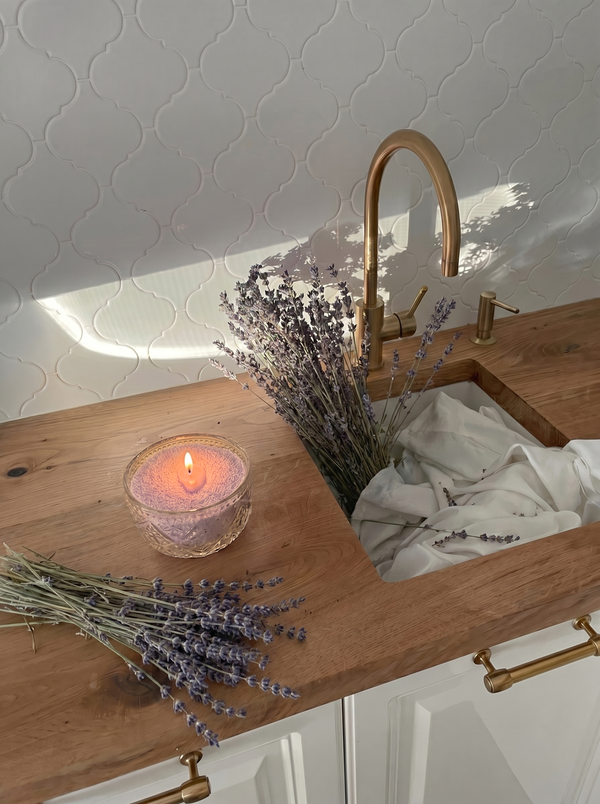
Lavender Fog
A sand candle is a pourable candle made from granulated wax that can be used in any heat-safe vessel. Pour ...
Learn more →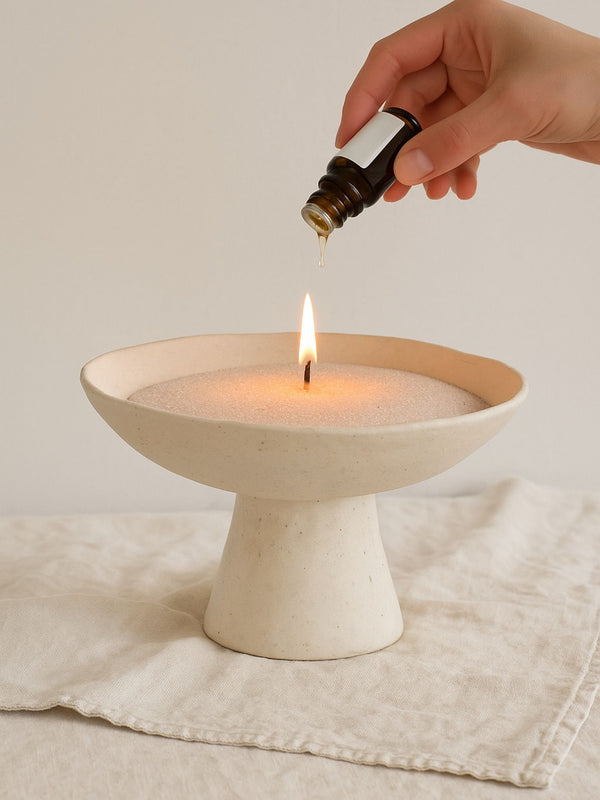
Original Unscented
A sand candle is a pourable candle made from granulated wax that can be used in any heat-safe vessel. Pour ...
Learn more →