


A regular candle is fixed wax poured into a jar that you burn once and discard. A sand candle uses loose, granular wax you pour into any vessel, burn, and refill. Sand candles win on reusability, waste, even burning, and long-term cost; regular candles win on instant convenience and the widest scent selection. Here's the honest, factor-by-factor comparison.
“Sand candle” sounds novel, so the first thing most shoppers want is a straight comparison against the container candle they already know. This is that comparison — including where regular candles genuinely still win, because pretending otherwise wouldn't help you decide.

What is a sand candle?
A sand candle is made from loose, pourable wax — often plant-based, like Candella's RSPO-certified palm wax. You pour the wax into any heat-safe container, add a wick, light it, and refill when it's spent. There's no fixed jar, so the same vessel can hold a different scent next month and the same wax can move between vessels.
What is a regular (container) candle?
A traditional container candle is wax melted and set into a single jar at the factory. You burn it down once, and when the wax is gone you're left with a jar to clean out or throw away. It's the format most people grew up with: convenient, familiar, and available everywhere.
Side-by-side comparison
| Factor | Sand candle | Regular candle |
|---|---|---|
| Reusable vessel | Yes — any vessel, refill forever | No — one jar, one life |
| Even burn / tunneling | No memory ring | Prone to tunneling |
| Cleanup | Pour out and refill | Scrape or freeze wax |
| Waste | Near-zero container waste | Jar discarded each time |
| Cost over time | Cheaper per burn (refills) | Pay for a new jar each time |
| Scent variety | Can be customized by you | Huge selection everywhere |
| Convenience to start | Pour-it-yourself step | Light it out of the box |
| Customization | Match any décor vessel | Fixed factory jar |
Burn quality and waste, explained
Regular candles strand wax against the jar walls when they tunnel, and the leftover inch around a drowned wick is simply lost. Sand wax burns flat across the surface, so you use almost all of what you bought. On the waste side, every regular candle ends as a jar that has to be cleaned and recycled (and small glass jars are frequently not recycled in practice) or thrown out. A refillable system keeps one vessel in use indefinitely.
Cost over time: a simple example
Imagine you burn one candle a month. With regular candles you buy a whole new jar-and-wax product every time. With a sand candle you buy the vessel once, then only pay for wax refills — and refills cost less than a complete new candle. Over a year, the refillable route typically comes out cheaper, and the gap widens the more you burn. Occasional burners see less of this advantage, which is a fair reason some people stick with regular candles.
Scent and convenience: where regular candles win
We'll be honest: a mass-market container candle is grab-and-go with zero setup, and the sheer variety of scents on shelves is unmatched by any single refillable brand. If you light a candle only now and then and don't care about the jar afterward, a regular candle is perfectly fine. Sand candles ask for one extra step — pouring the wax in — in exchange for reuse, less waste, and a flatter burn. Container candles also have stronger scent throw than sand candles.
The hybrid most sustainable option
There's a third path that beats both: take the regular candle jars you already own, clean them out, and refill them with sand wax. You get the vessel you liked, zero new container manufacturing, and the flat burn of granular wax. It's the lowest-waste way to keep enjoying candles.
Environmental footprint compared
The clearest environmental difference is the container. A regular candle pairs a single use of wax with a jar that's manufactured, shipped, and then usually discarded — and small glass jars with glued metal wick tabs are among the items most likely to slip through recycling streams. A refillable sand candle keeps one vessel in service indefinitely, so the only thing you repurchase is the wax. Choosing a plant-based, RSPO-certified wax over paraffin (a petroleum by-product) lowers the footprint of each burn further. For a regular candle habit the jars add up fast; for a refillable one they essentially stop accumulating.
Scent throw: how they compare
Here's an honest trade-off: sand candles usually have a softer scent throw than a solid poured candle. Because the wax is loose and granular, there are small air gaps between the granules, so less wax sits in the melt pool releasing fragrance at any given moment than in a candle poured solid to the edges. Throw still depends heavily on the fragrance load, the wax, and the size of the room — a well-scented sand wax suits a small or medium space nicely — but if you want a bold, large-room throw, a solid container candle generally pushes more scent. Many people actually prefer the gentler, less overpowering scent of a sand candle for everyday rooms; if you want more, use a scented wax, fill the vessel generously, and keep it to a cozier space.
Common objections to sand candles, answered
“Isn't pouring a hassle?” It takes seconds, and only when you start a fresh burn cycle. “Is it actually sand?” No — the name describes the loose, granular texture; it's wax. “Will it be messy?” Spent wax pours out cleanly, which is less mess than scraping a regular jar. “Is the scent selection limited?” It's smaller than the entire container-candle market, but you can easily customize to your own fragrance.
Who's switching, and why
The people who get the most from sand candles are regular burners, lovers of specific vessels (vintage, handmade, or sentimental pieces a factory candle could never use), and anyone trying to cut household waste without giving up the ritual.
Not sure which scent suits you? Our scent quiz matches you in under a minute. For more, see why sand candles are smarter than traditional candles and our first-timer FAQ.
Durability and shelf life
Both formats keep well if stored cool and out of direct sun. Loose sand wax has an edge for people who buy ahead or in bulk: it stores compactly and you only commit it to a vessel when you're ready to burn, so nothing sits half-used on a shelf. A regular candle, once opened, is on its single life cycle whether you burn it promptly or not.
The wick and the little extras
With a sand candle you reuse or replace wicks as part of the refill, and a basic kit — wax and wicks — covers you indefinitely. There's no proprietary lock-in: any heat-safe vessel you already own can join the rotation, which is part of the appeal for people who like to restyle with the seasons or match a candle to a specific room.
Making the switch without overthinking it
You don't have to convert your whole home at once. The easiest first step is to take one empty jar you already like, clean it out, and refill it with sand wax — you keep a vessel you love, create zero new waste, and get a feel for the pour-and-refill rhythm before buying anything else. If you enjoy it, expand from there; if you decide you're an occasional burner after all, you've lost nothing.
The bottom line
Neither candle is “wrong.” Regular candles are the convenient, available-everywhere default. Sand candles trade one small pouring step for reuse, less waste, a flatter burn, and lower cost over time. The more often you burn, the more the refillable model pays off — in money saved and in jars never thrown away.
Frequently asked questions
Are sand candles worth it?
If you burn candles regularly, yes — refills cost less per burn and you stop throwing away jars. Occasional burners may prefer the convenience of regular candles.
Do sand candles burn cleaner than regular candles?
They burn more evenly, with no tunneling. How cleanly depends on the wax: plant-based, RSPO-certified wax burns cleaner than paraffin.
Are sand candles cheaper than regular candles?
Over time, yes. The upfront vessel cost is offset because each refill is cheaper than buying a complete new candle, and you waste less wax.
Do sand candles smell as strong as regular candles?
Usually a little softer. The air gaps between the loose granules mean less wax is in the melt pool at once, so the throw tends to be gentler than a solid poured candle — which many people prefer for everyday rooms. As with any candle, throw also depends on the fragrance load, the wax, and the room size.
Can you reuse a regular candle jar like a sand candle?
Yes — clean it out and refill it with sand wax. That hybrid is the most sustainable option of all.
Is sand candle wax actually made of sand?
No. The name describes the loose, granular, pour-able texture; it's wax, not sand.
Can I use any container for a sand candle?
Most heat-safe vessels work — glass, ceramic, metal, or stone. Avoid anything cracked, plastic, or not rated for heat, and make sure it's stable and deep enough to hold the wax and wick safely.
How long does a sand candle last compared to a regular one?
Burn time depends on the volume of wax, like any candle — but because sand candles burn flat and strand almost none against the glass, you tend to get more usable hours from the same amount of wax.
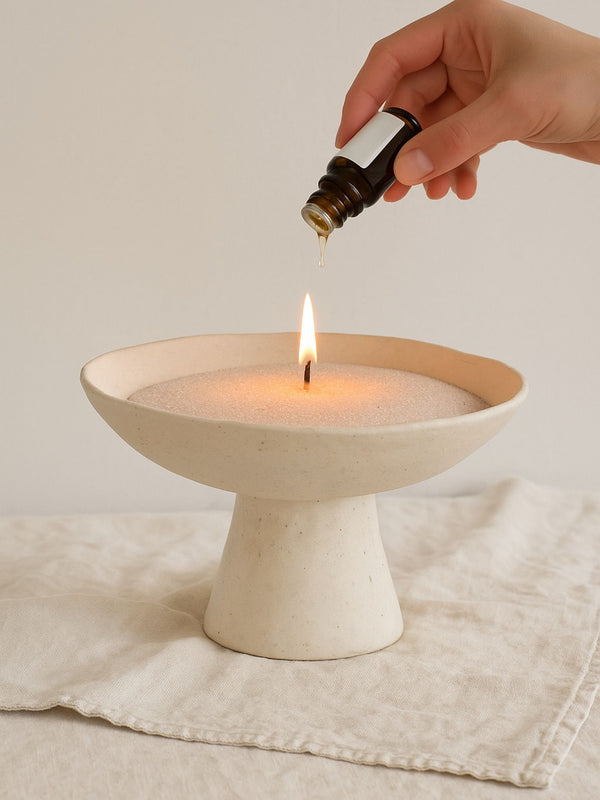
Original Unscented
A sand candle is a pourable candle made from granulated wax that can be used in any heat-safe vessel. Pour ...
Learn more →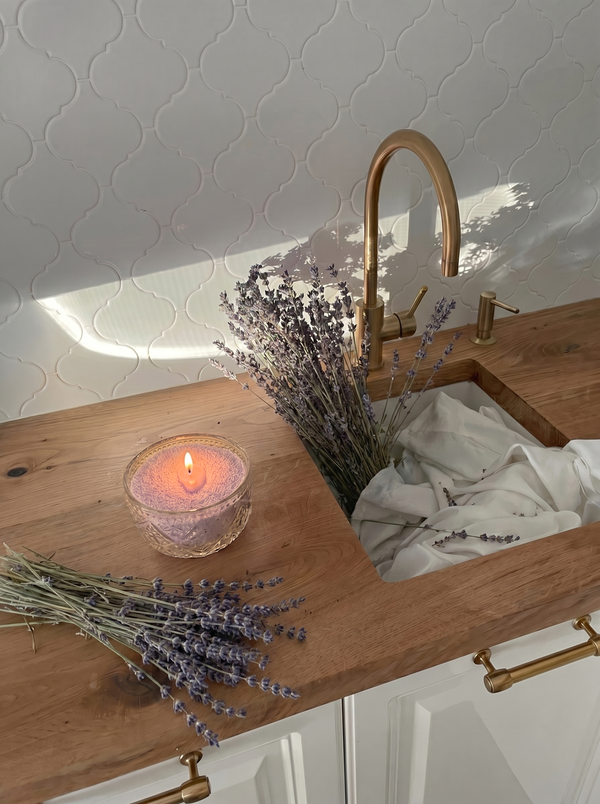
Lavender Fog
A sand candle is a pourable candle made from granulated wax that can be used in any heat-safe vessel. Pour ...
Learn more →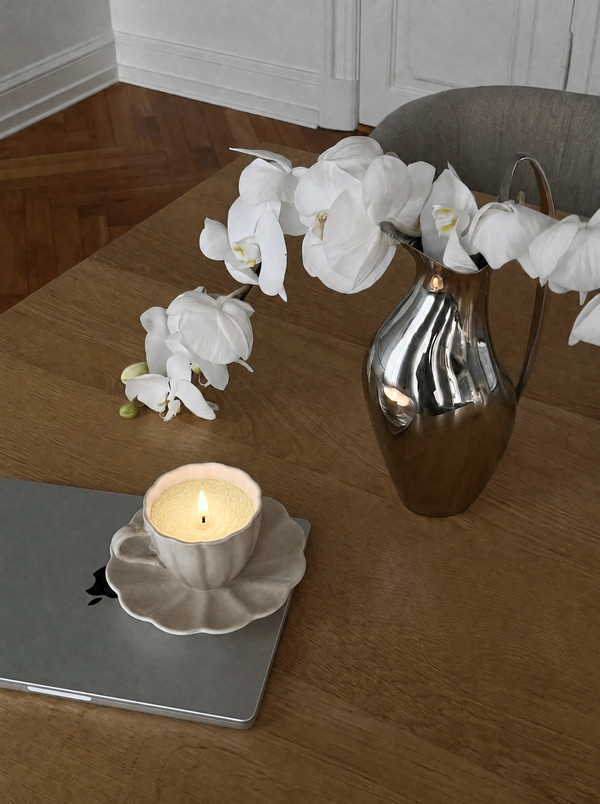
Jasmine Oolong
A sand candle is a pourable candle made from granulated wax that can be used in any heat-safe vessel. Pour ...
Learn more →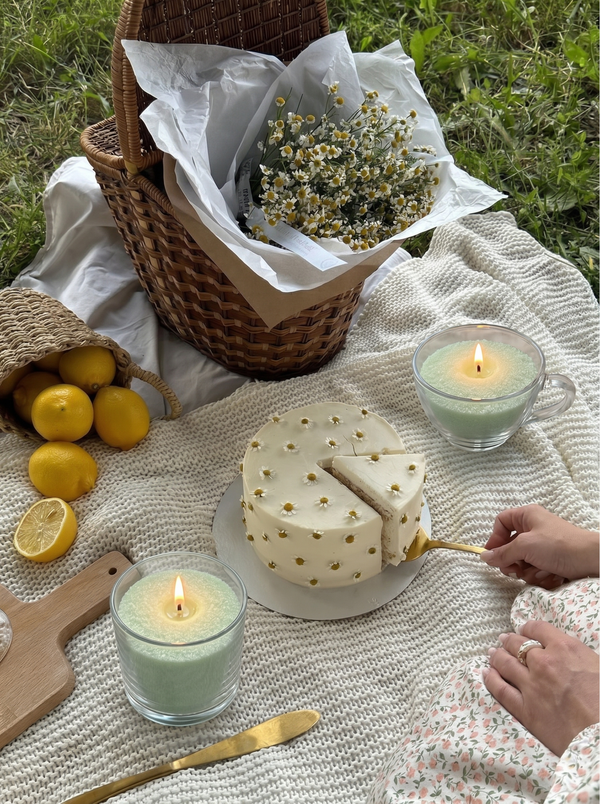
Garden Picnic
A sand candle is a pourable candle made from granulated wax that can be used in any heat-safe vessel. Pour ...
Learn more →