


Sand candles aren't classified as toxic, and a plant-based one is among the cleaner options you can burn. The wax is what matters most: Candella uses RSPO-certified plant-based palm wax with cotton wicks and lightly scented fragrance — no paraffin, no petroleum, and minimal soot. As with any candle, burn it with a little ventilation and a trimmed wick, and keep in mind that some essential oils aren't suitable around certain pets.
“Are sand candles toxic?” is one of the first questions new buyers ask, and it's a fair one — the candle aisle is full of vague “clean burning” claims and scary headlines about what you're breathing in. The honest answer depends almost entirely on what the candle is made of, not whether it's poured solid or loose. Here's what's actually in a sand candle, what the research does and doesn't say, and how to tell a genuinely clean one from a cheap mystery kit.

What's actually in a sand candle?
A sand candle has three parts, and each one shapes how cleanly it burns:
- The wax. This is the big one. Candella's granules are RSPO-certified, plant-based palm wax — a renewable, plant-derived wax, not paraffin (which is a petroleum by-product). Wax type is the single biggest factor in how much soot and how many combustion by-products a candle releases.
- The wick. A quality sand candle uses a cotton wick with no metal core. Lead-core wicks were banned in many countries years ago, but very cheap imports occasionally still cut corners — another reason the source matters.
- The fragrance. Scented versions use fragrance oils that should meet IFRA safety standards and be phthalate-free. Candella's unscented wax contains no fragrance at all, and you can add your own oil if you'd rather control exactly what goes in.
So, are sand candles toxic?
In the strict regulatory sense, no — sand candles aren't classified as toxic, and neither are most candles from reputable makers. The real debate in the candle world isn't “sand vs regular”; it's paraffin vs plant-based wax. Paraffin is derived from petroleum and tends to produce more soot and particulate matter as it burns. Plant-based waxes like soy, coconut, and RSPO-certified palm burn cleaner, with less visible soot. So a sand candle made from plant wax sidesteps the very thing most people are worried about when they ask whether a candle is “toxic.”
The nuance worth knowing: most studies find that, in normal home use with reasonable ventilation, the emissions from any well-made candle are low. The disagreement is about quantities and long-term exposure. If your priority is avoiding petroleum-derived ingredients entirely, you want a fully plant-based wax — which is exactly what a Candella sand candle is.
“Sand candle,” “Sand & Fog,” “sand art” — clearing up the confusion
Some of the toxicity worry comes from mixed-up names, so it's worth untangling them:
- Sand candles (what we make) are a category: loose, refillable wax granules you pour into any vessel. Whether they're clean depends on the wax.
- “Sand & Fog” is a specific candle brand often found in discount stores. Despite the beachy name, it's typically a paraffin-and-palm blend — not a plant-based sand candle. If you've searched whether Sand & Fog is toxic, you were really asking about a paraffin blend, which is a different product.
- “Sand art” or “sand painting” candle kits are craft sets of colored wax granules. Many are unbranded imports with no wax disclosure — exactly the kind of mystery wax worth being cautious about.
The takeaway: don't judge by the word “sand.” Judge by whether the maker tells you what the wax actually is.
Soot, air quality, and “clean burning” — what's true
All candles produce some soot; it's a natural product of combustion. The amount depends on the wax and, crucially, on the wick. Plant-based waxes produce less soot than paraffin, and you can cut it further with basic care: trim the wick to about 5 mm before each burn, keep the flame out of drafts, and don't burn in a sealed, unventilated room. Do that with plant wax and you'll see very little black residue on the glass. If a candle is smoking heavily, that's usually a wick or draft problem rather than the wax — extinguish, trim, and relight.
Are sand candles safe around pets?
Mostly yes, with the same common sense you'd use for any candle — plus one extra consideration around fragrance. The flame itself is the obvious risk: curious cats and wagging tails don't mix with open flame, so keep candles on stable, set-back surfaces and never leave them burning unattended. On the fragrance side, some essential oils and strong fragrances (tea tree, eucalyptus, and certain citrus oils) can be a problem for cats and birds in particular, whose systems process these compounds differently than ours. If you have pets, an unscented sand candle is the safest choice, or pick a lightly scented one and burn it in a well-ventilated space. When in doubt about a specific oil and a specific animal, your vet is the right person to ask.
Are they safe for allergies and fragrance sensitivity?
This is an area where sand candles have a genuine edge. Because the wax is loose and granular, a scented sand candle tends to have a softer scent throw than a solid poured candle — less fragrance is released into the room at once. Many people with fragrance sensitivity find that gentler, less overpowering scent far more comfortable than a candle that fills the whole house. And if you want zero fragrance, unscented sand wax gives you a completely neutral burn — or a blank base you can scent yourself, with an oil you already know you tolerate.
How to choose a genuinely clean sand candle
Since the word “sand” tells you nothing about safety, here's what to actually look for:
- Named, plant-based wax. Look for soy, coconut, or RSPO-certified palm — and be wary of listings that won't say what the wax is.
- Cotton wicks, ideally stated as lead-free.
- IFRA-compliant, phthalate-free fragrance — or an unscented option for full control.
- A real maker with transparency about ingredients and sourcing, rather than an anonymous marketplace kit.
How Candella's wax measures up
Candella sand candles are made from RSPO-certified, plant-based palm wax — renewable, petroleum-free, and low-soot — with cotton wicks and a refillable, zero-waste format. There's an unscented option for fragrance-sensitive and pet households, and our scented wax uses IFRA-compliant fragrance. You can read more about the wax in our guide to RSPO palm wax, and about safe burning in are sand candles safe? If you're weighing formats overall, our sand candle vs regular candle guide breaks it down.
Shop clean-burning, plant-based sand candles — or start with Original Unscented if you'd prefer fragrance-free.
Frequently asked questions
Are sand candles toxic to breathe?
Not in normal use. Plant-based sand candles like Candella's produce minimal soot and no petroleum by-products. Burn with some ventilation and a trimmed wick and emissions stay low.
Are sand candles safe for cats and dogs?
The flame is the main risk — keep candles set back and supervised. For fragrance, some essential oils can affect cats and birds, so choose unscented or lightly scented options around pets, and ask your vet about specific oils.
Is sand candle wax the same as Sand & Fog candles?
No. “Sand & Fog” is a brand that's typically a paraffin-and-palm blend. A sand candle is a category of loose, refillable wax; Candella's is fully plant-based RSPO palm.
Do sand candles produce soot?
All candles do to some degree, but plant-based waxes produce far less than paraffin. Trim the wick and avoid drafts to keep it minimal.
Are sand candles okay for people with asthma or allergies?
Many find the softer scent throw gentler than a strong jar candle, and unscented wax removes fragrance entirely. Anyone with a serious respiratory condition should see how a specific product affects them.
Is “sand painting” candle sand the same as Candella's wax?
Not necessarily. Craft “sand art” kits are often unbranded imports with undisclosed wax. Candella's is named, plant-based RSPO palm wax with cotton wicks.
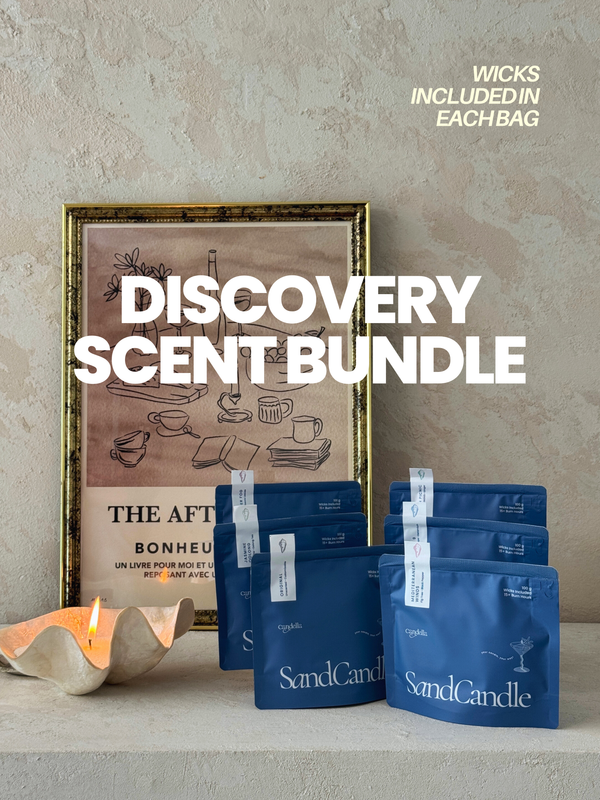
Eco Sand Candle Discovery Set – 6 Scents
A sand candle is a pourable candle made from granulated wax that can be used in any heat-safe vessel. Pour ...
Learn more →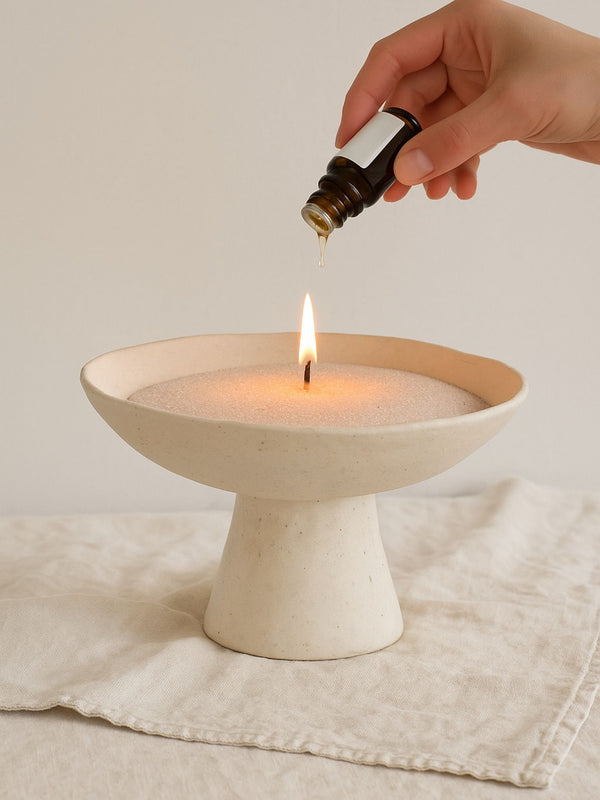
Original Unscented
A sand candle is a pourable candle made from granulated wax that can be used in any heat-safe vessel. Pour ...
Learn more →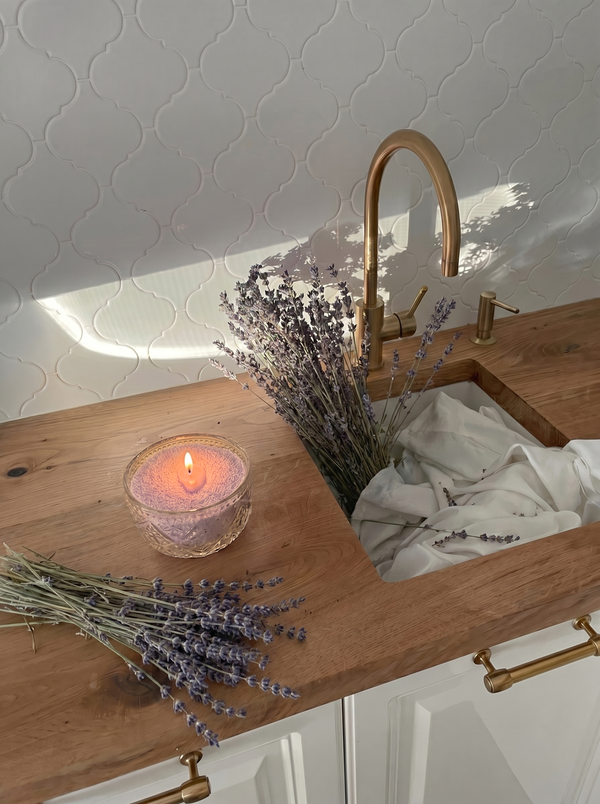
Lavender Fog
A sand candle is a pourable candle made from granulated wax that can be used in any heat-safe vessel. Pour ...
Learn more →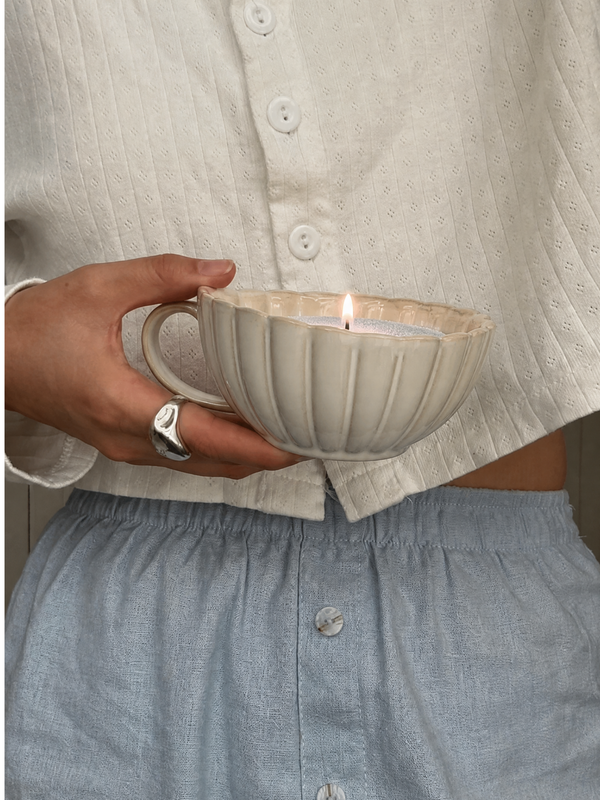
Cloud 9
A sand candle is a pourable candle made from granulated wax that can be used in any heat-safe vessel. Pour ...
Learn more →